The unbelievable disaster in Nepal cast a chilling shadow over the week. On August 26, a deadly wave of what looked like liquid concrete flushed through the country, starting close the Tibet border, on the northern slope of Lantang Lirung, ending in the lowlands just hours later. The early warning system hardly worked; thousands people and animals stood little chance when they were ungulfed by rock, water and debris.

It reminded me of a life-changing event, eleven years ago, on April 15, 2015, when an earthquake struck Nepal. in the aftermath I led a medical rescue team consisting of vets and paravets, responding to the countless injured livestock and companion animals. Today the organisation is once again sending a team with medical supplies to the affected region.
History seems to repeat itself.


How to prepare for such a disaster? And how can trauma be avoided – or at least mitigated?
In the years leading up to the long predicted earthquake, the UN, government and aid agencies advised households and organisations to be prepared emergency kits, alarms and go-bags.
As a Westerner, this seemed both sensible and important. My Nepali colleagues were less impressed. Who was going to refresh the items each year and how would they access the kits after an earthquake anyway?
But I was not to be deterred.
I ordered blue drums with essentials for the office and for each shelter. I added some bags of kibble for the dogs. I tried convincing the staff to put one at their residence too, for free. They simply shrugged their shoulders.
Then the earthquake hit.
The next day I remembered the blue drums. Surely now my colleagues would understand why I had insisted on them. They would open them and take out the emergency rations, foil blankets, torches and water-purification bottles.
The drums remained unopened.
Instead, the staff did what most Nepalese did: they acted as a community. They jointly found solutions for housing, food and communications. They shared what they had and worked out what was needed.
My small tent, shipped from Holland, ripped during the first night, unable to withstand four restless dogs. The gardener quickly built a sturdy replacement using a tarpaulin and bamboo poles cut from the garden. A mosquito net acted as the entrance.
That tent lasted for months.


It was a humbling lesson on disaster preparedness in a country like Nepal.
The small rations of canned and dried food in my blue barrels suddenly seemed almost ridiculous. A Nepali family could have eaten them for breakfast and finished the lot.
Western tools would never be used. Instead, the staff used what was locally available—often simple, natural materials—and their own knowledge of how to make things work.
But I was to learn a second, even more important lesson. On how trauma works.
During the first quake I was alone in the house (an apartment above the office), together with the dogs. That evening, friends invited me to camp in their garden, and cook together. I said no, feeling responsible for the office and the dogs. Instead I slept alone in my tent outside, feeling lonely, vulnerable and frightened. How were my colleagues and friends doing? Were they even alive? What if an aftershock brought the house down? What if the enormous trees above me fell? How long could I safely go inside to cook or take a shower?
The aftershock came seventeen days later, when most staff had returned. We were busy at the office. “Ayo bhukampa!” —the earthquake has come!— someone shouted. We tumbled out of the building, which shook like a rocky boat. In the garden we held on to each other, laughing hysterically when a neighbour screamed ‘Ayo, bhukampa!‘ long after the quake stopped.
I remember the first earthquake as frightening and traumatic. I felt as if I had lost the ground beneath my feet.
But I remember the aftershock differently. I was a scare but not deeply upsetting. I remember people holding each other. I remember laughter. I remember drinking coffee afterwards and saying, over and over again, how lucky we were.

After that, I decided to move back into the house. Leaving the doors open at night, keeping the alarm nearby, I was willing to risk another earthquake. I wanted to be comfortable and feel at home again.
Yesterday I came across a newspaper article about a Dutch medical professional volunteering in a military hospital in Kharkiv, Ukraine. After spending a day working at the intensive care, she described feeling overwhelmed. Before going to bed, she visited a group of nurses on the ward.
“Where have you been? Did you eat?” they ask her. They eat, talk, laugh and embrace. When going to bed the images in her head have become ‘softer’.
We are social creatures after all.
Most people who experience a potentially traumatic event do not go on to develop lasting trauma. Why some people do and others do not is complex. Biology and genetics play a role, as do previous experiences, character, stress tolerance, and the availability of safety and support.
But one factor seems particularly important: the sympathetic presence of others.
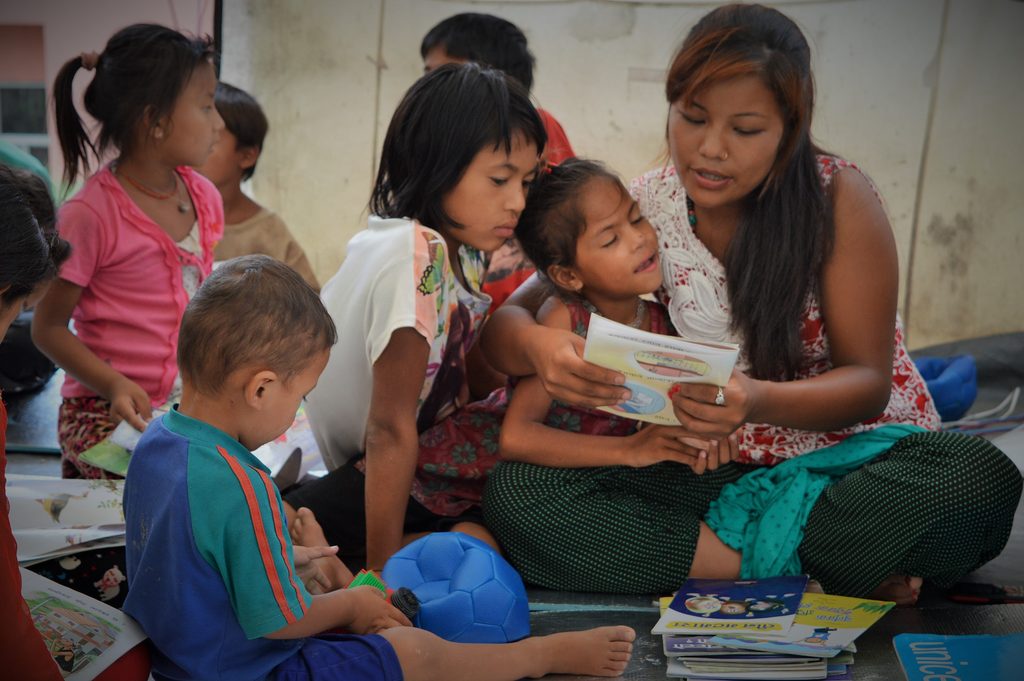
The Nepalese are often called a resilient people. At times this is inappropriate, depicting them as superhuman. The resilience of people is not an individual superpower; it grows within tight knit communities.
A powerful examples of this is the reconstruction of Langtang. Like many places along the Bhotekosi river this week, Langtang was wiped off the map when it was hit by an avalanche during the 2015 earthquake. Survivors were evacuated to Kathmandu, where they lived bewildered in makeshift shelters.

The government proposed resettling the group in the Terai, the hot lowlands of Nepal. Here the mountain people would feel completely out of place. The community decided to return and to rebuild. And they did, with much difficulty, reweaving the fabric they once were.

I hope these lessons will increasingly guide disaster preparedness and management. Being prepared for the inevitable is not only about things you can store in a drum; it is about the social infrastructure and support that allows people to survive and recover together.
We need to build on historical and cultural practices and learn from what already works in local settings. Starting with local knowledge and locally available resources. Asking communities what they need and how they want to be supported.
And most importantly: don’t do as I do.
Geef een reactie